

Imagine this: you’re out with friends, and your phone is about to take its last breath—battery at 1%. Panic sets in as you realize you need that precious juice for a last-minute selfie or to call an Uber. Wouldn’t it be great if you could just borrow some battery from your buddy’s iPhone? Well, hold onto your chargers because this is a question that has sparked curiosity among iPhone users everywhere.
Overview of Battery Sharing on iPhone
Battery sharing on iPhone addresses the need for extra power in critical moments. Users often wonder about the capability to transfer battery life between devices. iPhones lack a built-in feature for direct battery sharing similar to some Android devices.
In certain situations, it’s possible to use a portable power bank as an alternative. A power bank provides an easy solution for users who need a quick charge. Wireless charging pads can serve the same purpose when shared among devices equipped with that functionality.
According to Apple, iPhones utilize energy-efficient technology to extend battery longevity. Optimizing settings like Low Power Mode can aid in conserving battery life during emergencies. Users can also manually adjust background app refresh settings or reduce screen brightness.
Although Apple’s ecosystem supports efficient battery usage, sharing batteries directly isn’t feasible. Therefore, asking friends for a charging cable remains the most practical option in low battery scenarios. When friends are willing to help, having a charging cable handy is essential for quick recharges.
Battery sharing remains a popular topic among iPhone users. Understanding current limitations can help users better prepare for low battery emergencies. For those seeking solutions, exploring portable power accessories offers a reliable backup plan.
Features of Battery Sharing
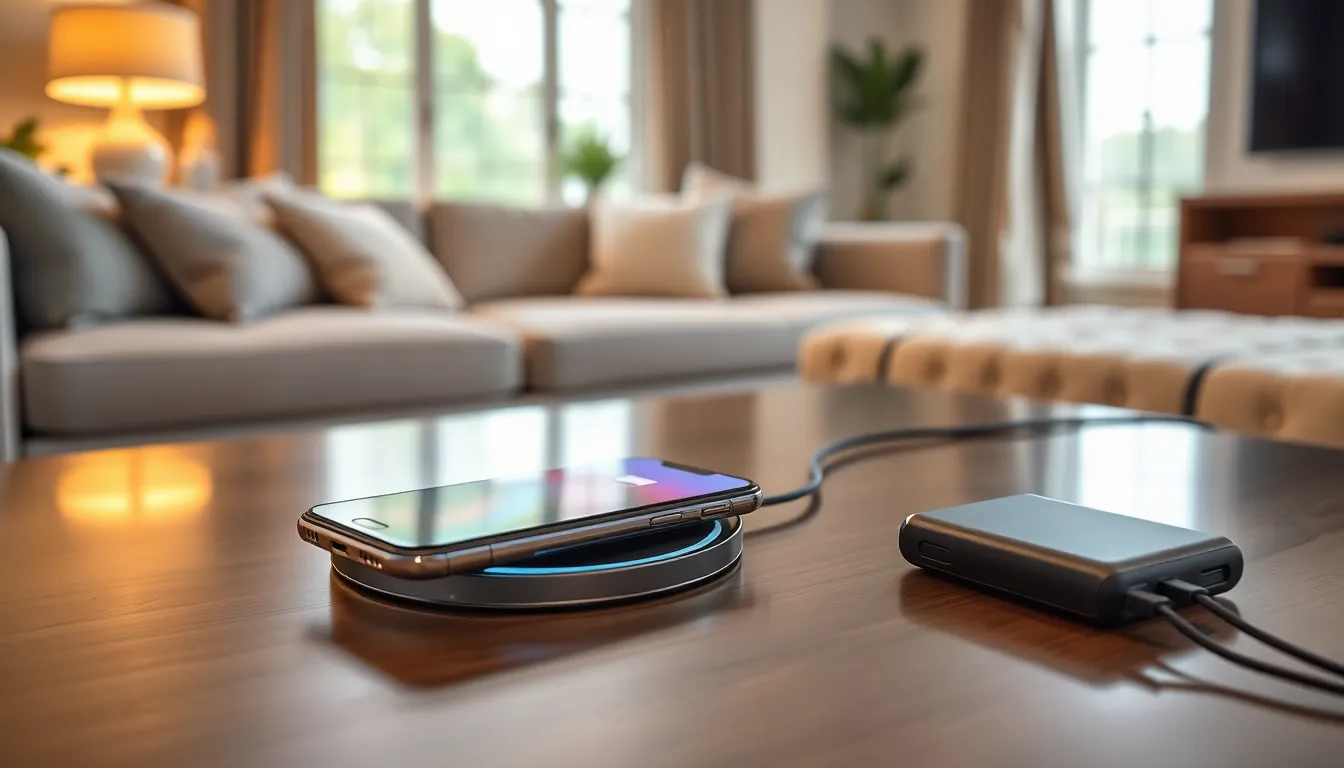
Battery sharing features remain limited on iPhones, but users can explore alternatives for quick charging needs effectively.
Wireless Charging
Wireless charging offers convenience, allowing users to power their devices without cables. Many iPhones support Qi-compatible chargers. Users simply place their phones on compatible pads for a charge. Fast charging capabilities enhance the charging process, with some pads delivering up to 15 watts. This option proves useful in crowded settings, enabling quick boosts when needed most.
Battery Sharing with Accessories
Battery sharing through accessories represents another practical solution. Portable power banks deliver on-the-go charging. Various models cater to different device needs, with capacities ranging from 5,000 to 20,000 mAh. Users should prioritize reliability and compatibility when selecting these devices. Additionally, some wireless charging cases enable users to draw power from external sources efficiently. Overall, portable accessories ensure users stay connected while navigating battery challenges.
How to Share Battery on iPhone
iPhone users can’t directly share battery power between devices. However, there are alternative methods to effectively manage low battery situations.
Step-by-Step Guide
- Use a portable power bank to recharge an iPhone. Many models have multiple outputs for charging several devices.
- Connect the iPhone to a compatible wireless charger. Qi chargers work seamlessly with recent iPhone models for effortless charging.
- Enable Low Power Mode in settings to extend battery life. This setting reduces background activity and visual effects.
- Adjust screen brightness manually. Lower brightness conserves energy during critical moments.
- Turn off Background App Refresh for unused apps. Disabling this feature optimizes battery consumption.
Troubleshooting Common Issues
Users may face challenges when using charging accessories. First, ensure the power bank is charged and correctly connected. If a wireless charger isn’t working, reposition the iPhone to align with the charging pad. In some instances, incompatible accessories might cause charging failure; checking for certification can help. If the battery continues to drain quickly, consider running diagnostics through the settings menu to identify problematic apps. Keeping the iOS updated also prevents potential software conflicts affecting battery performance.
Benefits of Battery Sharing
Battery sharing offers several advantages, even if iPhones don’t support direct sharing between devices. Accessing power from a friend’s iPhone during an emergency ensures users can stay connected. Enhancing social interactions occurs naturally when users assist each other with battery needs.
Portable power banks and wireless chargers provide practical alternatives to direct sharing. These accessories allow users to charge their devices without requiring explicit sharing, enabling flexibility in crowded spaces. Utilizing fast charging capabilities makes replenishing battery life quick and efficient when time is limited.
In addition, portable charging solutions enhance convenience, especially for users on-the-go. Many users find peace of mind knowing that they can charge their devices without being restricted by cable length. Qi-compatible charging pads further streamline the process, allowing for a simple drop-and-charge experience.
Reliability stands as another significant benefit. Users can charge devices anytime and anywhere, reducing the anxiety that accompanies low battery levels. Choosing high-quality charging accessories ensures performance and compatibility across different iPhone models.
Staying connected becomes easier in shared environments like cafes or parks. Conveniently using a friend’s power source fosters a communal atmosphere and strengthens relationships. Through these shared experiences, users build camaraderie while addressing common battery concerns.
Ultimately, exploring portable power solutions and accessories leads to improved battery management practices. With the right tools at hand, users navigate low battery situations efficiently. Prioritizing effective charging options aligns well with maintaining an active lifestyle and ensures that connectivity remains uninterrupted.
Limitations of Battery Sharing
Battery sharing on iPhones presents several limitations. Users cannot transfer battery power between devices directly, as iPhones lack this built-in feature. This absence restricts the ability to borrow power from a friend’s mobile device during critical moments.
Moreover, relying solely on other devices poses challenges. Some users may not carry charging cables, making it difficult to connect for power. Not all friends might have compatible chargers available, further complicating what could be a straightforward solution.
Wireless charging offers convenience but has its drawbacks as well. Not every iPhone model supports wireless charging, which means some users remain excluded from this option. Additionally, using a wireless charger while sharing space can create logistical issues in crowded settings, as available surface areas may be minimal.
Battery accessories are an alternative but come with limitations too. Portable power banks require prior charging, meaning users can’t always depend on them in emergencies. Inconsistent compatibility with various devices often limits the effectiveness of these products.
Services like Low Power Mode offer a temporary fix. However, this mode only prolongs battery life rather than boosting power levels. Adjustments to screen brightness sound beneficial but do not directly resolve low battery situations.
Overall, navigating battery limitations highlights the need for proactive planning. Users need to consider alternative strategies before heading out, ensuring they stay connected without relying solely on others’ devices. Understanding these constraints enhances preparation and minimizes anxiety associated with battery failures.
While iPhone users can’t directly share battery power with friends, there are several effective alternatives to consider. Utilizing portable power banks and wireless chargers can provide quick solutions in low battery situations. Additionally, enabling Low Power Mode and adjusting settings can help prolong battery life during emergencies.
Planning ahead is crucial for maintaining connectivity. By exploring these options and staying prepared with charging accessories, users can navigate battery challenges with ease. Staying connected is essential in today’s fast-paced world, and understanding how to manage battery life effectively can make all the difference.

